

April 20, 2026
A conventional yoga retreat adds a single activity — maybe a nature walk or a spa afternoon — around a schedule built entirely for practice. A safari, on its own, is built entirely around wildlife and landscape, with little room for stillness.
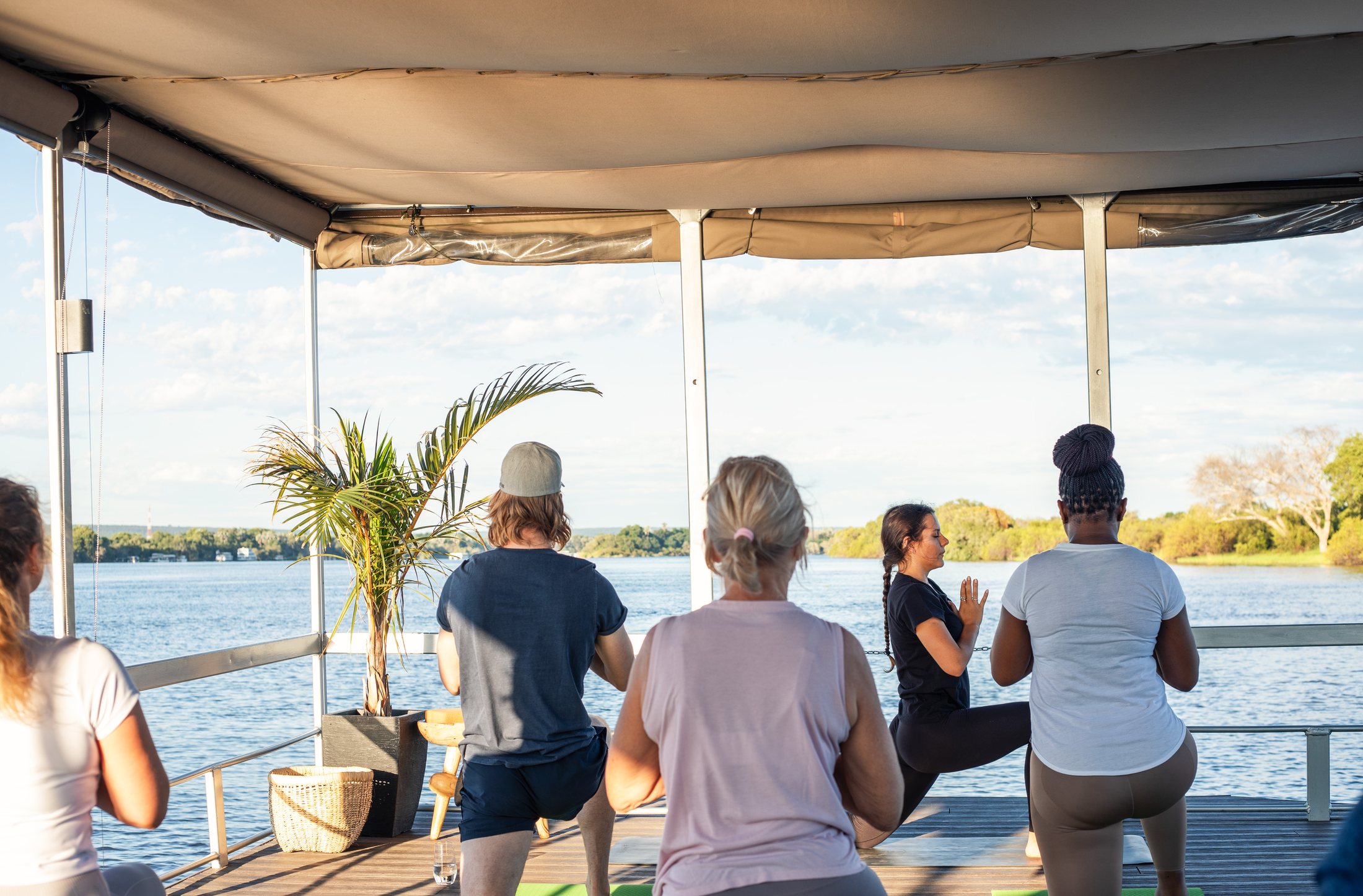
A yoga safari, as we build it, intentionally integrates both: the safari isn’t an add-on to the retreat, and the yoga isn’t an add-on to the safari. Mornings might open with practice before a game drive; evenings might close with a river-deck session after a day in the bush.
The result is a trip that asks more of you in both directions — genuine physical adventure and genuine stillness — rather than a compromise between the two.

It affects the itinerary structure from day one. A pure retreat is built around a fixed daily schedule with practice as the anchor; a pure safari is built around game-viewing windows dictated by animal behaviour and light. A yoga safari has to reconcile both calendars.
In practice, that means our itineraries treat sunrise and sunset — the two windows that matter most for both wildlife activity and quality light for practice — as fixed points, and build everything else around them, rather than defaulting to a rigid studio-style timetable.
If your group’s priority is deep, uninterrupted practice with wildlife as a backdrop rather than a focus, a retreat-forward itinerary with lighter safari elements may suit better than a full yoga safari.
If your group is drawn primarily by the destination — a bucket-list safari, a specific park or landmark — a safari-forward itinerary with yoga as a grounding thread will likely serve them better than a practice-heavy schedule.
Most groups, in our experience, want something genuinely in between, which is why we build each itinerary from a conversation about priorities rather than offering a single fixed template for every group.

 For Retreat Leaders
Get in touch and we'll build a full itinerary and pricing around your dates, destination and group size.
Get in Touch to Book Your Retreat